Restorative Dentistry Kingsway

Restorative Dentistry Kingsway​

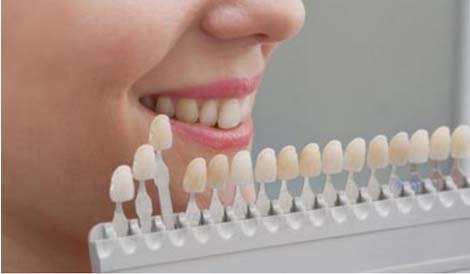
Philips Zoom teeth whitening smile results in Vancouver

Restorative dental treatments today really encompass all the disciplines that dentistry has to offer. They use an integrated inter-disciplinary approach to achieve optimum dental health, function and aesthetics for our patients. That is where our care across restorative dentistry at our Kingsway clinic and the other areas of dentistry helps us achieve the best possible long-term results for our patients.

Philips Zoom teeth whitening smile results in Vancouver


Restorative Dentistry Kingsway Services

At Happy Family Dental Centre, we offer a comprehensive range of dental services to meet all your oral health needs, including:

Teeth colored filling

Teeth colored fillings are Composite fillings, or plastic or white fillings. Getting this kind of filling depends on where the tooth is in your mouth. We bite down hard on our back teeth (molars), so a plastic filling may not be a good choice.
To place this filling, your dentist cleans all decay from the tooth. On the inside of the hole, your dentist puts a glue (or bonding material). In thin layers, your dentist puts composite resin into the hole. Each layer gets hard with the help of a special light. Your dentist holds the light over the tooth. When the last layer of the filling is hard, your dentist shapes the filling. It looks and feels natural.

Advantages

These fillings will be the same colour as your natural teeth. They cost less than gold fillings. They are direct fillings, so your dentist can do them in one appointment in most cases.

Disadvantages

This kind of filling can break more easily than amalgam or gold fillings. Composite fillings cost more than amalgam fillings but with great esthetic appearance. Recurrent decay is more of a problem than with amalgam or gold fillings.

Dentist examining a child's teeth
Dental Crowns

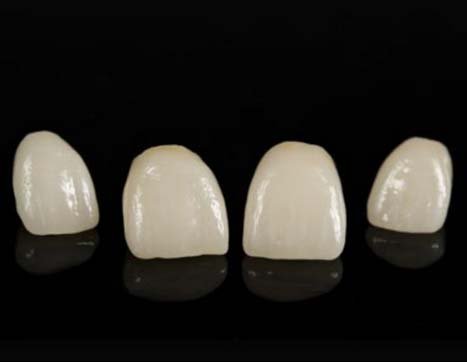
A dental crown is a tooth-shaped “cap” that is placed over a tooth — to cover the tooth to restore its shape and size strength and improve its appearance. When cemented into place, the crowns fully encase the entire visible portion of a tooth that lies at and above the gum line.
We provide warranted crowns with warranties of 5 years, 10 years, 15 years and lifetime warrantied Zirconia based CAD-CAM (Computer aided Designing and Computer aided machining) crowns.

Why Is a Dental Crown Needed?

A dental crown may be needed in the following situations:
To protect a weak tooth (for instance from decay) from breaking or to hold together parts of a cracked tooth. Absolutely painless and extremely comfortable. To cover and support a tooth with a large filling when there is not a lot of tooth left. Also, to hold a dental bridge in place. To cover misshapened or severely discolored teeth. To cover a dental implant. For a cosmetic modification.

For children a crown may be used on primary (baby) teeth in order to:

Save a tooth that decay has so damaged that it can not support a filling. Protect the teeth of a child at high risk for tooth decay especially when a child has difficulty keeping up with daily oral hygiene. Decrease the frequency of sedation and general anesthesia for children unable because of age, behavior or medical history to fully cooperate with the requirements of proper dental care. A stainless steel (SS) crown may be needed for a child’s tooth in cases of extensive restorations.

Types of dental crowns

Provisional crowns serve primarily as a temporary measure on permanent teeth. The crown protects the tooth or filling while a dental laboratory makes a permanent crown from another material. For children, a stainless steel crown commonly fits over a primary tooth prepared to fit it. The crown covers the entire tooth and protects it from further decay. When the primary tooth comes out to make room for the permanent tooth, the crown comes out naturally with it.

Metals used in crowns include gold alloy, other alloys (for example palladium), or a base-metal alloy (for example cobalt or chromium). Compared with other crown types, less tooth structure needs to be removed with metal crowns. Metal crowns keep tooth wear to opposing teeth to a minimum.

Porcelain-fused-to-metal dental crowns can match the color of your adjacent teeth (unlike the metallic crowns). However, more wearing to the opposing teeth occurs with this crown type compared with metal or resin crowns. The porcelain portion of the crown can also chip or break off. Next to all-ceramic crowns, porcelain-fused-to-metal crowns look most like normal teeth. However, sometimes the metal underlying the crown’s porcelain can show through as a dark line, especially at the gum line, and even more so if your gums recede. These crowns can be a good choice for front or back teeth.

All-ceramic or Zirconia dental crowns provide better natural color match than any other crown type. They may be more suitable for people with metal allergies. However, they are not as strong as porcelain-fused-to-metal crowns. They wear down opposing teeth a little more than metal or resin crowns. All-ceramic crowns are a good choice for front teeth.

Temporary versus permanent

Your dentist can make temporary crowns in your dentist office. A dental laboratory makes permanent crowns. Temporary crowns use acrylic or stainless steel. They can serve as a temporary restoration until a lab constructs a permanent crown.

Dental Bridges

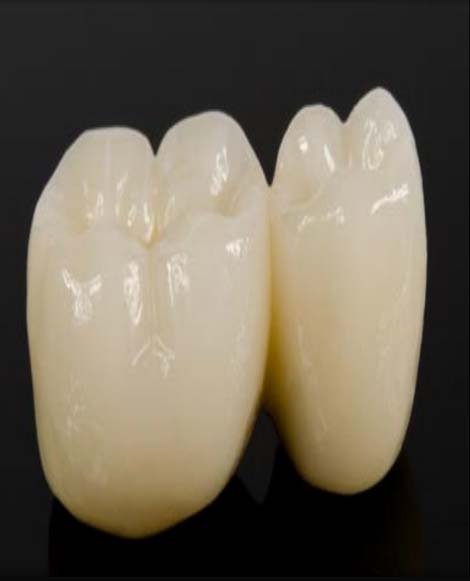
Dental bridges literally bridge the gap created by one or more missing teeth. A bridge consists of two crowns for the teeth on either side of the gap, and a false tooth/teeth in between. These two anchoring teeth are called abutment teeth. These false teeth are called pontics, and a dental lab can make them from gold alloys, porcelain, or a combination of these materials. Natural teeth or implants support dental bridges.

Bridges can
Restore your smile. Restore the ability to properly chew and speak. Maintain the shape of your face. Distribute the forces in your bite properly by replacing missing teeth. Prevent remaining teeth from drifting out of position.

Procedure for Placing a Dental Bridge

During the first visit for getting a dental bridge, your dentist prepares the abutment teeth. Preparation involves recontouring these teeth. Recontouring removes a portion of enamel to allow room for your dentist to place a crown over them. Next, your dentist makes impressions of the teeth. They serve as a model from which a dental lab will make the bridge pontic and crowns. Your dentist will make a temporary bridge to wear. It protects the exposed teeth and gums while a dental lab is making the bridge.

During the second visit, your dentist will remove your temporary bridge. Your dentist will check and adjust the new permanent bridge as necessary to achieve a proper fit. Multiple visits may be required to check the fit of the metal framework and bite. This is dependent on each individual case. If the dental bridge is a fixed (permanent) bridge, your dentist may temporarily cement it in place for a couple of weeks. This makes sure it is fitting properly. After a couple of weeks, your dentist permanently cements the bridge into place.

Dentures

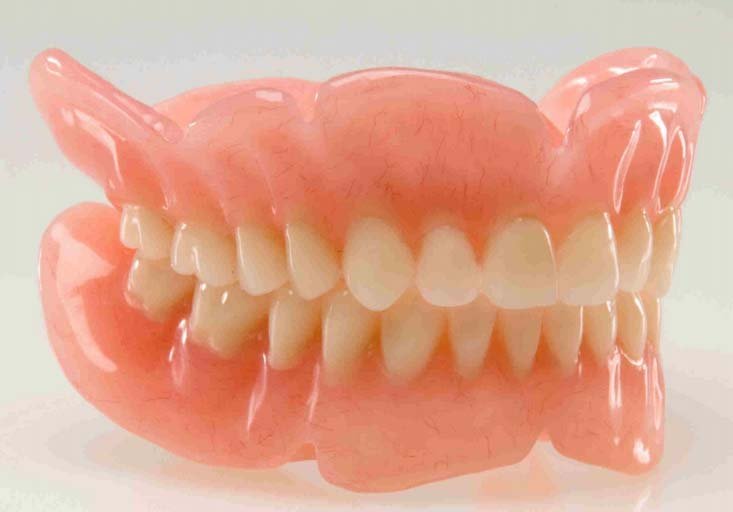
Dentures are removable appliances that can replace missing teeth and help restore your smile. If you have lost all of your natural teeth, whether from gum disease, tooth decay or injury, replacing missing teeth will benefit your appearance and your health. That is because dentures make it easier to eat and speak better than you could without teeth. These are things that people often take for granted. When you lose all of your teeth, facial muscles can sag. This makes you look older. Dentures can help fill out the appearance of your face and profile. They can closely resemble your natural teeth, so that your appearance does not change much. Dentures may even improve the look of your smile.

Types of dentures

Conventional dentures full mouth dentures This full removable denture is made and placed in your mouth after the remaining teeth are removed and tissues have healed. This may take several months.

Partial Dentures

A removable partial denture or bridge usually consists of replacement teeth attached to a pink or gum-colored plastic base. A metal framework connects the base and holds the denture in place in the mouth. Your dentist uses partial dentures when one or more natural teeth remain in the upper or lower jaw. A fixed (permanent) bridge replaces one or more teeth. It places crowns on the teeth on either side of the space and attaches artificial teeth to them. Your dentist then cements this “bridge” into place. Not only does a partial denture fill in the spaces created by missing teeth, it prevents other teeth from changing position. A precision partial denture is removable. It has internal attachments rather than clasps that attach to the adjacent crowns. This is a more natural-looking appliance.

Inlays and Onlays

Indirect fillings are another name for inlays and onlays. They are useful for repairing slight tooth decay damage. However, they are both different and have different uses for different individual cases. Here we will look at the differences between the two. Inlays and onlays, as mentioned, both repair decay. They specifically fill cavities, which are the slight holes on the inside of the teeth (the chewing surface). It is important to fill these. Filling them covers up exposed nerves, prevents food from getting stuck and prevents further decay.

Your dentist places both inlays and onlays in one visit. This makes them non-invasive and very rapid solutions. However, there will be some associated pain. As such, your dentist will give the patient a local anaesthetic and often provide nitrous oxide and oxygen. Your dentist will also need to remove the decay on the tooth before applying the inlays and onlays. These are not quite as permanent a solution as regular fillings. They can last several decades, depending on the nature of the case as well as the material used. The materials for them include: gold, composite resin, ceramics or plastic. Your dentist will normally cement them into the cusps on the top of the teeth.

Book Your Appointment Today

let us help you reveal your brightest smile yet! Located conveniently in Vancouver, we offer easy booking and flexible appointment times for your convenience.

Book Appointment

Scroll to Top
Call Now Button